

From ERP data to profitable decisions: a manufacturing e-commerce case study
At a glance
SECTOR
Manufacturing/E-commerce
CLIENT SIZE
300+ Employees
DELIVERED IN
3 months
TECH STACK
BigQuery, dbt, Fivetran,
Hex, Tableau, Github
2hrs
saved per week
3 months
to live
£15k
yearly client savings
100%
client data ownership
The Client
A global e-commerce brand with manufacturing operations in the UK, selling across approximately 250 products. The business had already invested in a modern data stack — Fivetran for ingestion, BigQuery as the warehouse, and Tableau for reporting. The infrastructure was in place. What was missing was the analytical intelligence to make it useful.
The Challenge: Manual, Inaccurate Profitability Analysis and Disconnected Data
Despite having sophisticated tools, the essential task of cost of goods analysis remained a manual, ad-hoc process. This involved exporting data from the ERP system into spreadsheets and manually stitching it together. The result was a lack of a consistent, trustworthy view of product profitability, margin erosion, or performance against financial targets.
The challenge wasn’t a simple integration task; it was fundamentally an analytical one, driven by significant complexity: Data was spread across three systems, each with its own data model and logic. With 250 SKUs spanning bulk materials, components, and labour-intensive manufacturing orders, connecting these systems into a coherent commercial picture wasn't a plumbing problem. It was an analytical one.
The business needed reliable, granular insight, SKU-level profitability, not just aggregate margin to understand the profitability of every single product. They needed to track how raw material costs, labour, and product mix were shifting over time. And they needed it to be reliable, repeatable, and always current — not dependent on someone spending a day in a spreadsheet.
The Approach
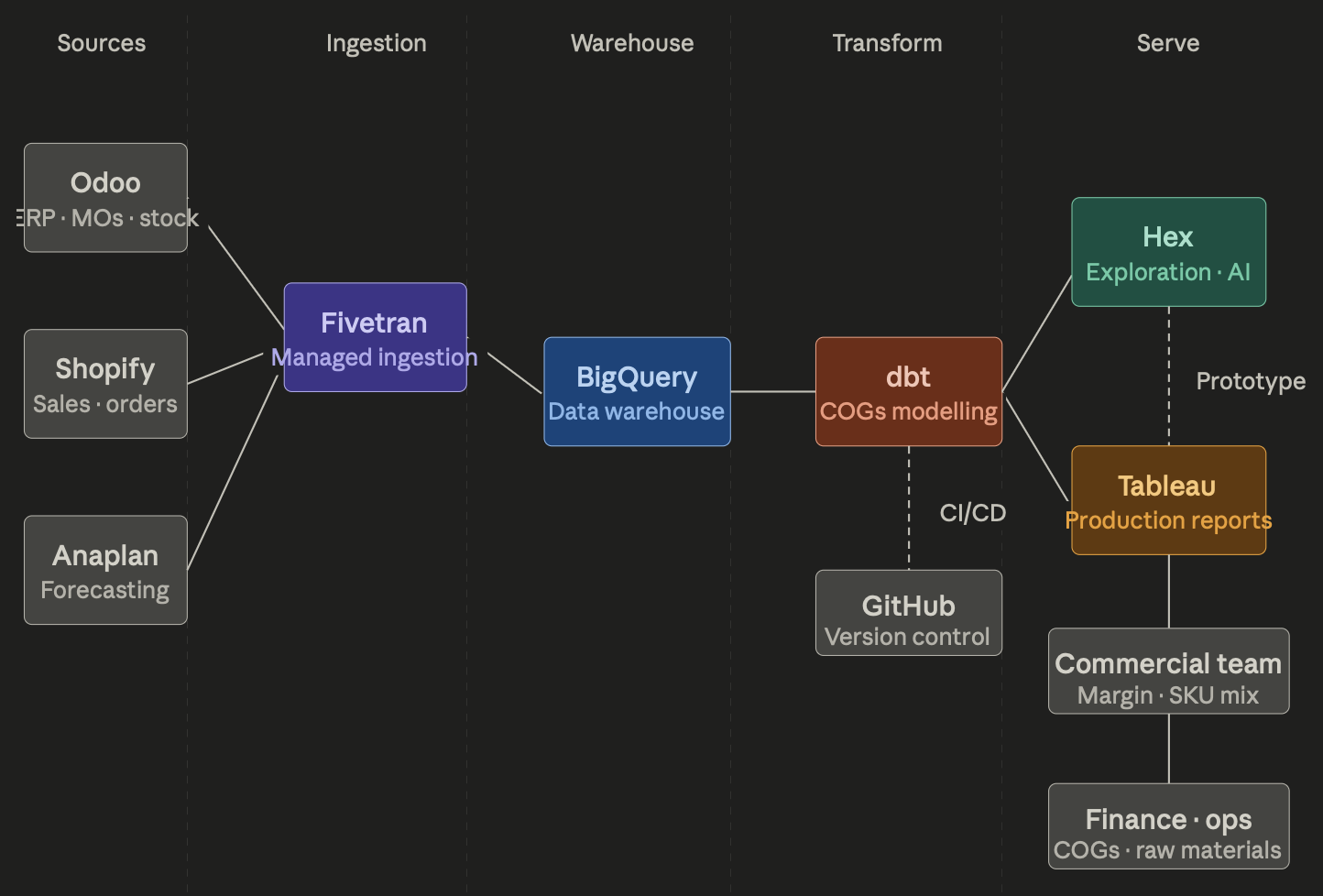
The engagement centred on creating the analytical layer, a dbt transformation project, atop the existing BigQuery data infrastructure. This project's goal was to convert raw operational data into trustworthy, decision-ready insights.
This meant modelling cost of goods at the manufacturing order level: pulling stock moves, stock valuations, bills of materials, labour records, and raw material purchases from Odoo, joining these to sales data from Shopify and forward-looking forecasts from Anaplan, and building a coherent, tested model that could be trusted by the commercial team.
An iterative approach was key to success. Hex was used extensively for rapid prototyping and exploratory analysis, allowing the business to validate and challenge the data model's logic at every stage. This ensured transparency and buy-in before the model was productionised into Tableau for ongoing reporting.
Crucially, all transformation logic is fully documented, auditable, and version-controlled within GitHub, ensuring the client maintains complete ownership of the solution.
The Outcome: Enhanced Cost and Margin Visibility
The business successfully transitioned from relying on fragmented spreadsheet exports to achieving near-real-time financial clarity across its entire product portfolio.
This transformation delivered the following key benefits:
Cost of goods tracked at the manufacturing order level — broken down by bulk materials, components, and labour
Product margin leaderboard giving leadership a clear view of which products are performing against target and which aren't
Raw material cost tracking over time, surfacing where input costs are creeping and impacting margin
Product mix analysis enabling more informed decisions on ranging, pricing, and production focus
Near-real-time visibility replacing a previously manual, ad-hoc process across 250 products
The Practical Impact
For the first time, the commercial team gained immediate, clear visibility into their operations — at a glance — which products were their most profitable, which were underperforming against target, and where costs were moving. Their investment in the data stack was finally delivering value. Decisions that previously relied on instinct or a laborious spreadsheet exercise now had a reliable, always-current foundation behind them.
Seen enough to have a conversation?
For businesses looking to make faster, more confident decisions — we'll identify where the data is holding you back and show you exactly where the quick wins are.
Preparing for Exit or Investment?
Is your data due-diligence ready?
We'll assess your data against what acquirers and investors typically scrutinise — and give you an honest view of the gaps before they become deal risks.